
Getting us there: $80–$180
The standard Sydney attendance fee. Ours is stated on the call, before you decide anything.
When water is coming through the ceiling, the useful question is not "who opens at eight", it is "who answers now". We do. Around the clock across Parramatta, a licensed plumber picks up, talks you through making it safe, and gets a crew moving.
Here is the test we give callers: is it spreading? Water spreading through a ceiling, waste rising in a floor drain, gas reaching more of the house: spreading problems are emergencies, because every hour of waiting is added to the repair bill. Static problems, a drip into a bucket, a slow drain with a second bathroom available, can usually sleep until daylight rates. Tell us what you see and we will sort it into the right column honestly.
The other half of the job happens before we arrive. Whoever answers your call talks you through the shut-off that stops the damage, the meter valve for water, the cylinder valve for a failing tank, evacuation and 131 909 for gas, so by the time the van reaches Parramatta, Harris Park, Westmead, Rosehill or anywhere across the Western Sydney, the situation is stable and the repair can start instead of the triage.


The CBD’s dense apartment towers share drainage stacks where food waste, grease and wipes build up and back multiple units up at once.
A café or kitchen with a backed-up floor waste has a different problem from a household. There is a health standard to meet, staff arriving in a few hours, and a grease line that has usually been narrowing for months before the night it finally closes over.
We clear and jet trade waste lines after hours specifically so premises open on time, and we will tell you honestly whether tonight buys you a week or a year. If the line is glazed hard with old fat, the answer is a scheduled jet and a service interval, not another call-out at emergency rates next month.
Ground close to the water holds more of it, sits lower, and moves more than ground further up. Over decades that shows up in the drainage as joints that have opened slightly, falls that have flattened, and lines that silt where they once ran clean.
Low ground near the Parramatta River drains slowly in heavy rain, overloading stormwater pits and backing water into yards and basements.
None of that is an emergency by itself. It is the reason an emergency here often turns out to be the last stage of something that has been developing quietly, and why the camera run after the clear is worth more than the clear.
Parramatta’s Federation and Victorian homes still run original clay lines that crack and admit roots, a leading cause of slow drains in the older pockets.
A drainage system laid a century ago was built for a household that used a fraction of the water yours does. Add a second bathroom, a dishwasher and a washing machine, and lines that coped for decades start showing where they are weakest.
That is not an argument for replacing everything. It is an argument for knowing which sections are actually tired, so the money goes into those rather than into the whole run on the assumption that old means finished.
The slowest part of an apartment emergency is often not the plumbing, it is the door. Fob access, a basement that needs a resident to open it, a car park with no after-hours entry: any of those can add half an hour while water is still running.
Parramatta (postcode 2150) is Western Sydney’s second CBD, set on the Parramatta River and bordered by Harris Park, Westmead, Rosehill and North Parramatta. Its mix of apartment towers and Federation cottages gives its drains a real split personality, and we handle both.
Two things worth doing before you ever need them: find your lot's isolation valve, usually in the laundry or a hallway cupboard, and save the building manager's after-hours number in your phone. Both take five minutes on a calm evening and both save real time on a bad one.
On sloping ground the problem is rarely where the symptom is. Water leaves a failure at the highest point and surfaces at the lowest, which can be several properties away and well downhill of anything you would think to look at.
It is also why a neighbour's overflowing gully is sometimes your blocked line, and occasionally the reverse. We work uphill from the symptom rather than digging where the water appears.
A yard that floods in every serious downpour is a different problem from one that flooded once in a freak storm. The first is a blocked or undersized line and it will keep happening; the second is weather.
Telling them apart takes a camera on a dry day, not a guess in the rain. If it has happened twice, book the inspection between storms, clearing a surcharging pit at the height of it costs more and tells you less.
The standard Sydney attendance fee. Ours is stated on the call, before you decide anything.
Business hours runs $120–$160; nights, weekends and holidays sit above it. That is the honest cost of a plumber on the road at 3am.
What most real after-hours jobs come to once attendance, the first hour or two and small parts are tallied.
Slab access, gas line work, walls opened overnight. Quoted to you in full before a tool comes off the van.
If your description says it can safely keep until morning, we say exactly that and book you at weekday rates instead. Ask.
The figure is agreed with you before the work happens, at any hour, no exceptions. Figures here are indicative of the 2026 Sydney market rather than a quote from us, you get your own number as a fixed price before any work starts.
The person answering can actually help: what to shut off, whether it truly needs tonight, and a straight ETA for Parramatta.
Emergency vans carry the usual suspects, pipe, valves, hoses, drain machines, because a fix that waits for a supplier is not an emergency fix.
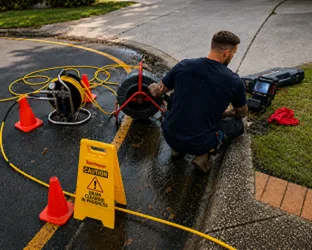
Damage stops first. Then the repair is priced, fixed, and you say yes or no with the number in front of you.

Almost always completed on the spot. Where a genuine part order is unavoidable, you are left sealed, safe and running until it arrives.
Call and describe it. If it can hold, we will tell you, and book you at daytime rates. If it cannot, you will be glad you rang tonight.
Phone is fastest at any hour. Form enquiries after dark ring through to the on-call plumber, not an inbox that opens at nine.

Leave your details and our local Parramatta team will call you back fast.